Setting up a new laboratory requires careful planning. With the right new lab resources and an optimized layout, you can create a safe, efficient workspace. Reviewing a new lab resource guide and following helpful tips are excellent starting points for opening a new facility.
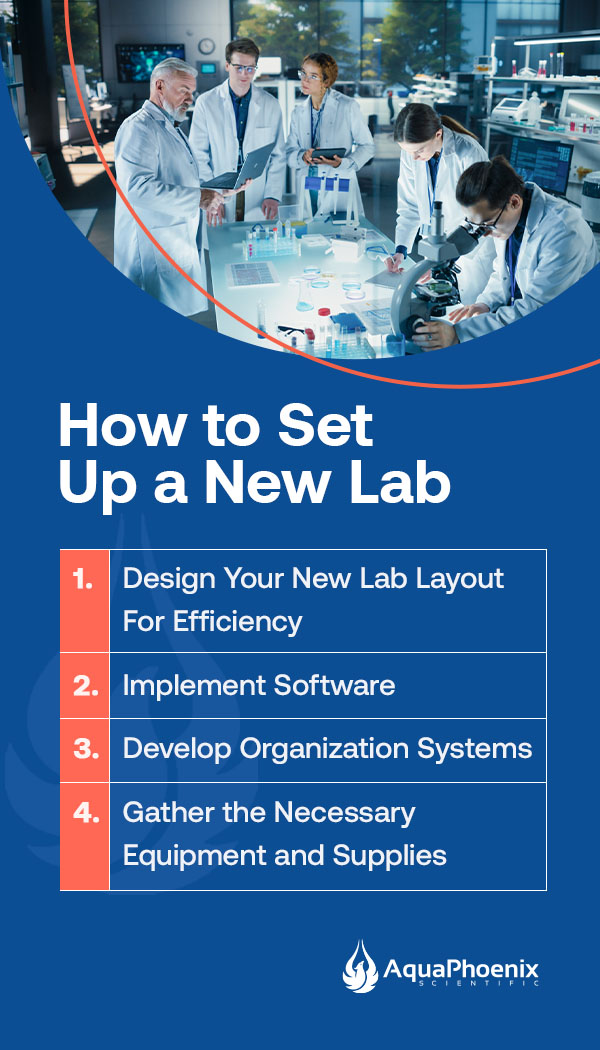
How to Set Up a New Lab
Setting up a new lab requires detailed planning, strategic investment in supplies and equipment, and strict adherence to regulatory standards. Whether your industry is water treatment, specialty chemical manufacturing or environmental testing, your new laboratory setup can significantly impact efficiency, safety, compliance and accuracy.
1. Design Your New Lab Layout For Efficiency
Focus on the following factors to ensure your laboratory’s layout supports efficiency:
- Workflow mapping: Reduce mistakes with a layout that minimizes cross-contamination risks. This is especially crucial for labs in the food and drug or medical industries. Use physical barriers, dedicated sinks and airlocks to separate sanitary and unsanitary zones if necessary.
- Traffic flow: Plan for high-traffic areas and sensitive instrumentation zones. Try to leave ample space in high-traffic areas, and plan to put equipment for delicate processes in less busy spaces.
- Ergonomics and safety: Place safety showers and eyewash stations close to workstations involving injurious corrosive materials. Workers will be able to reach them easily in the event of an emergency.
- Future-proofing: Design flexible spaces that can adapt as testing volumes increase. Modular furniture and portable equipment are easy to move if you need to rearrange spaces or add to your lab facility.
2. Implement Software
Choosing the right software for your lab is essential for boosting efficiency, protecting data, ensuring accuracy and streamlining regulatory compliance. Based on your lab operations, you may need one or all of the following software types:
- Laboratory information management system (LIMS): A LIMS is vital if you need to track samples. This is especially important if you operate a specialty chemical manufacturing facility that requires traceability.
- Inventory management: Inventory management software can help you track reagent expiration dates, which is critical for meeting safety standards and regulations.
- Reporting: Reporting software transforms manual, error-prone reporting processes into accurate, secure and streamlined workflows. This type of software is vital for compliance reporting. It automates Certificate of Analysis generation for customers.
Data integrity is crucial. You must ensure your software complies with your industry’s specific standards. For example, FDA-regulated sectors like tissue banks must comply with standards such as 21 CFR Part 11.
3. Develop Organization Systems
An organized lab boosts productivity, enhances safety and maintains quality. A well-organized lab minimizes clutter and reduces the time employees must spend searching for supplies. It also allows for easier scaling if you need to expand or change your lab’s layout in the future.
Focus on the following elements to develop an organized lab:
- Sorting: Sort your materials, tools and supplies, and designate a specific storage space for each item. This helps minimize clutter and makes it easier for employees to find what they need. It’s also important to inspect all of your old and new inventory to ensure everything meets your standards.
- Labeling protocols: Establish clear labeling for all containers, and standardize your lab’s labeling protocols to establish consistency. Proper labeling is crucial for compliance and safety in all sectors.
- Storage logic: Organize chemicals by compatibility. For example, acids and bases must be separate at all times.
- SOP development: Write standard operating procedures (SOPs) for every instrument and test method before your lab’s operations begin.
4. Gather the Necessary Equipment and Supplies
After sorting and organizing your existing inventory, it’s helpful to go through a checklist and determine what you need. These factors can help you stock your lab while keeping budget restraints in mind:
- Needs assessment: Distinguish between must-have and nice-to-have items before investing in new equipment or supplies. For example, compliance-critical supplies such as personal protective equipment (PPE) are must-haves, while efficiency-boosters like the latest testing equipment may be unnecessary when you first open your lab.
- Quality versus cost: While it may be tempting to save money with lower-cost supplies, investing in highly durable equipment provides a greater long-term return on investment.
- Vendor consolidation: Working with partners who can bundle hardware, reagents and consumables helps simplify procurement. Select a vendor that can streamline your ordering and restocking processes.
Specific needs vary by industry. It’s important to understand precisely what your lab requires for safe, smooth operations.
New Laboratory Checklist
Use this new lab checklist when taking inventory and determining what you need to order for your lab.
Chemicals/Reagents
Depending on your industry, you may need the following chemicals or reagents:
- ACS-grade/NIST-traceable reagents: If you operate a lab in the specialty chemical manufacturing industry, you will need ACS-grade/NIST-traceable reagents to meet safety regulations and quality standards.
- Bulk commodity chemicals: Bulk commodity chemicals such as hydrochloric acid, magnesium sulfate, solvents and salts are necessary in industries such as water treatment and food processing.
- Sanitation testing reagents: You may need food-grade or specific sanitation testing reagents for safe testing that prevents contamination and helps you comply with regulations.
Equipment
High-quality equipment powers your operations. Ensure you have the necessary equipment to perform the necessary functions.
- Sterilization: Equipment such as autoclaves, autoclavable bags and sterilization indicators are vital for sterilization procedures.
- Temperature control: If temperature control is important in your industry, you may need equipment such as baths, hot plates, hot plate stirrers, incubators or ovens.
- Cold storage: Cold storage equipment includes refrigerators, freezers, cryogenic supplies, ice makers and ice buckets.
- Separation and mixing: Separation and mixing procedures require centrifuges, rotors or adapters, shakers, stirrers, mixers and homogenizers.
- General equipment: It is also important to determine if your processes require general equipment such as freeze-dry systems, rotary evaporators, thermal cyclers, vacuum pumps or water purification systems.
Instrumentation
Instrumentation is just as important as equipment in lab environments. Ensure you have the necessary instrumentation for measurements, focusing on the categories related to your industry:
- Weighing: Balances, moisture analyzers, weigh dishes and spatulas are necessary for measuring the weight of materials.
- Electrochemistry: Meters, electrodes, probes and standards are important for electrochemistry measurements.
- Optical inspection: Optical inspection applications require equipment such as microscopes, slides, refractometers, spectrophotometers, cuvettes and colorimeters.
- General measurement: You must also determine if you need general measurement tools such as barometers, calipers, data loggers, hydrometers, timers and titration electrodes.
Chromatography Tools
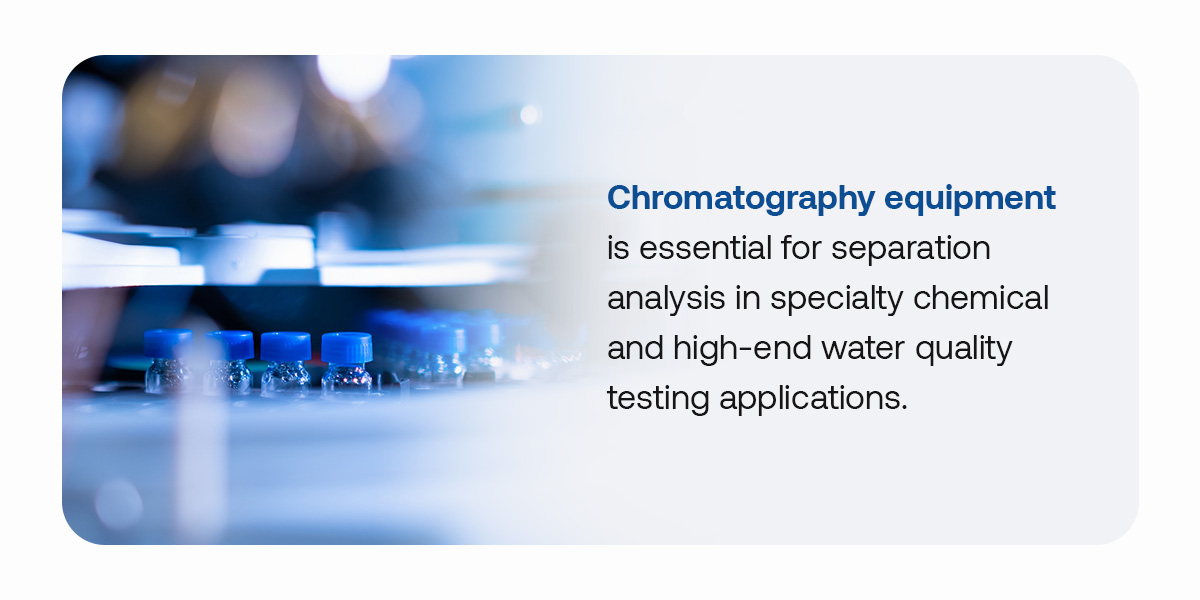
Chromatography equipment is essential for separation analysis in specialty chemical and high-end water quality testing applications. If you plan to open a lab in one of these industries, you may need to invest in the following equipment types:
- Gas chromatography tools: Equipment such as gas chromatography columns, inlet liners, and flow meters is necessary for separating, identifying, and quantifying volatile chemical components in complex mixtures.
- High-performance liquid chromatography (HPLC) equipment: HPLC columns, lamps, tubing, valves and filter systems are necessary for analysis and purification.
- Miscellaneous chromatography equipment: Equipment such as flash chromatography media, solid phase extraction tools, syringes, and vials is also vital for analyzing and purifying various materials.
Furniture
A lab’s furniture makes up its foundational infrastructure. Based on your applications, you may need some or all of the following furniture:
- Cabinets: When choosing cabinets for a new lab, it is important to look for features such as chemical resistance, robust locks, spill trays and ventilation. You should also consider cabinet size and flexibility for potential future needs.
- Carts: Carts should be durable and compatible with the chemicals your lab technicians need to handle. They should also have safety features such as brakes and nonslip surfaces.
- Chairs or stools: Chairs and stools in a lab should be chemical- and spill-resistant for easy cleaning. Anti-static properties are important if you work with sensitive electronics. Features such as adjustable height, armrests and lumbar support are not necessary, but they can increase comfort for technicians who sit for long periods of the day.
- Countertops: Durability, chemical resistance, heat resistance, and easy cleaning are important properties to look for in laboratory countertops.
- Fume hoods: Fume hoods are crucial if your lab handles hazardous chemicals that produce toxic fumes, dust, aerosols or vapors.
- Drying racks: You will need drying racks if your lab technicians use glassware or plasticware that requires efficient drying without the risk of contamination.
- Shelving: Shelving units must be strong enough to hold your lab’s equipment and materials, and they should be durable and easy to clean. It is also a good idea to look for shelving with flexible configuration for ergonomics and potential layout changes.
- Sinks: Foot controls, proper drainage and durability are important properties of laboratory sinks. Stainless steel is a common lab sink material due to its chemical and heat resistance.
Life Science Supplies
Life science supplies are essential in tissue banks, the food and dairy industry and biological water treatment analysis. Depending on your application, you may need life science supplies.
- Cell culture: Cell culture media, antibiotics, serum and tissue culture tubes are essential for growing and maintaining cells in controlled environments.
- Electrophoresis and molecular polymerase chain reaction (PCR) supplies: You will need electrophoresis tools such as acrylamide, agarose, gel boxes, power supplies, and molecular weight markers if your lab technicians analyze DNA, RNA and proteins. It is also important to ensure your lab has DNA/RNA kits, PCR plates, TAQ polymerase, thermal cylinders, and restriction endonucleases.
- Immunology and microbiology supplies: If you run an immunology or microbiology lab, you will need items such as ELISA supplies, antibodies, microplate readers and washers, agar, and petri dishes.
Safety
Safety equipment is nonnegotiable for all sectors. Stock your new lab with safety supplies to protect workers and your facility.
- Safety apparel: Ensure you have enough lab coats, aprons and face or head protection for all lab technicians.
- Chemical storage: Safety cans and cabinets that can handle flammable or corrosive materials are important for preventing fires and damage.
- Emergency response: First-aid supplies, spill kits and eye wash stations protect workers in the event of an injury or contact with a harmful chemical.
- PPE: Stock your lab with PPE such as ear protection, gloves, safety glasses and respirators based on the potential risks associated with your application.
- Signage and labels: Safety labels and signage help ensure that your employees avoid risks and follow proper procedures while working.
- Radiation protection: Barriers and lead aprons are necessary if your lab technicians use radiation in their work.
- Hand hygiene: Ensure technicians have sinks and hand soap to maintain proper hand hygiene on the job.
Miscellaneous Supplies
You also need to make sure you have the daily supplies and consumables that keep your lab running.
- Glassware and plasticware: Glassware and plasticware, such as beakers, bottles, cylinders, flasks and funnels, are essential for handling liquids and solids.
- Consumables: You may also need consumables such as aluminum foil, bags, bench protectors, wipes and parafilm.
- Tools: Remember to consider tools such as clamps, Bunsen burners, crucibles, desiccators and tubing.
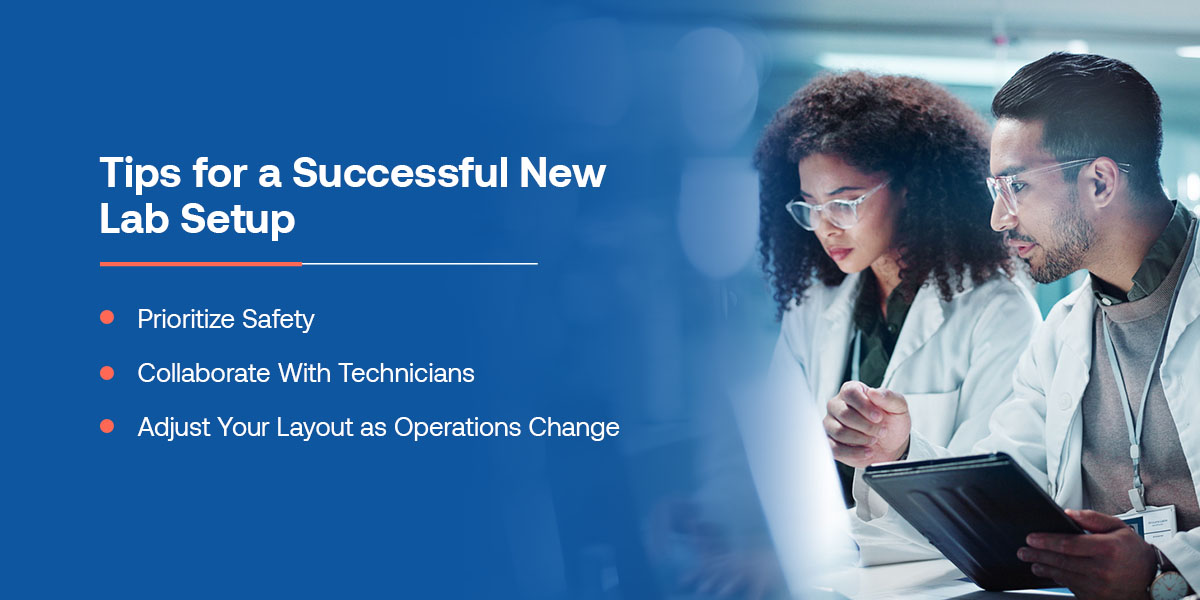
Tips for a Successful New Lab Setup
These steps can help you build a successful new lab from the ground up:
Prioritize Safety
Establish a safety culture from day one. Train lab technicians on proper chemical handling and storage, and place clear safety signage around your lab to ensure each employee understands proper procedures. You should also correctly label all materials and supplies before opening your lab.
Collaborate With Technicians
Involve lab technicians in the design process to ensure practical usability. Since technicians will use the lab daily for sensitive tasks, they understand their specific needs for safe, efficient workflows. You can consult with your employees on the best layouts and equipment positioning based on their usual routines, processes and traffic patterns.
Adjust Your Layout as Operations Change
Remain flexible as your lab grows. You may scale up production or expand test parameters in the future. When this happens, you might find that your lab needs a new layout to maintain safety and efficiency. Reevaluate your lab’s layout each year to determine if it still works for your operations. Make adjustments as necessary.
Find High-Quality Laboratory Furniture and Supplies From AquaPhoenix Scientific
Starting a new lab can present logistical challenges, but you can create a safe, efficient space with the right strategy. AquaPhoenix Scientific provides industrial lab supplies to help you design and stock your new facility. From furniture design to stocking your shelves, we offer fast service to help you transition to your new lab as smoothly as possible.
Our team is dedicated to going the extra mile. We tailor solutions to meet your exact needs and provide responsive support when you need it. Contact us to discuss your new lab project and learn more about how we can help.